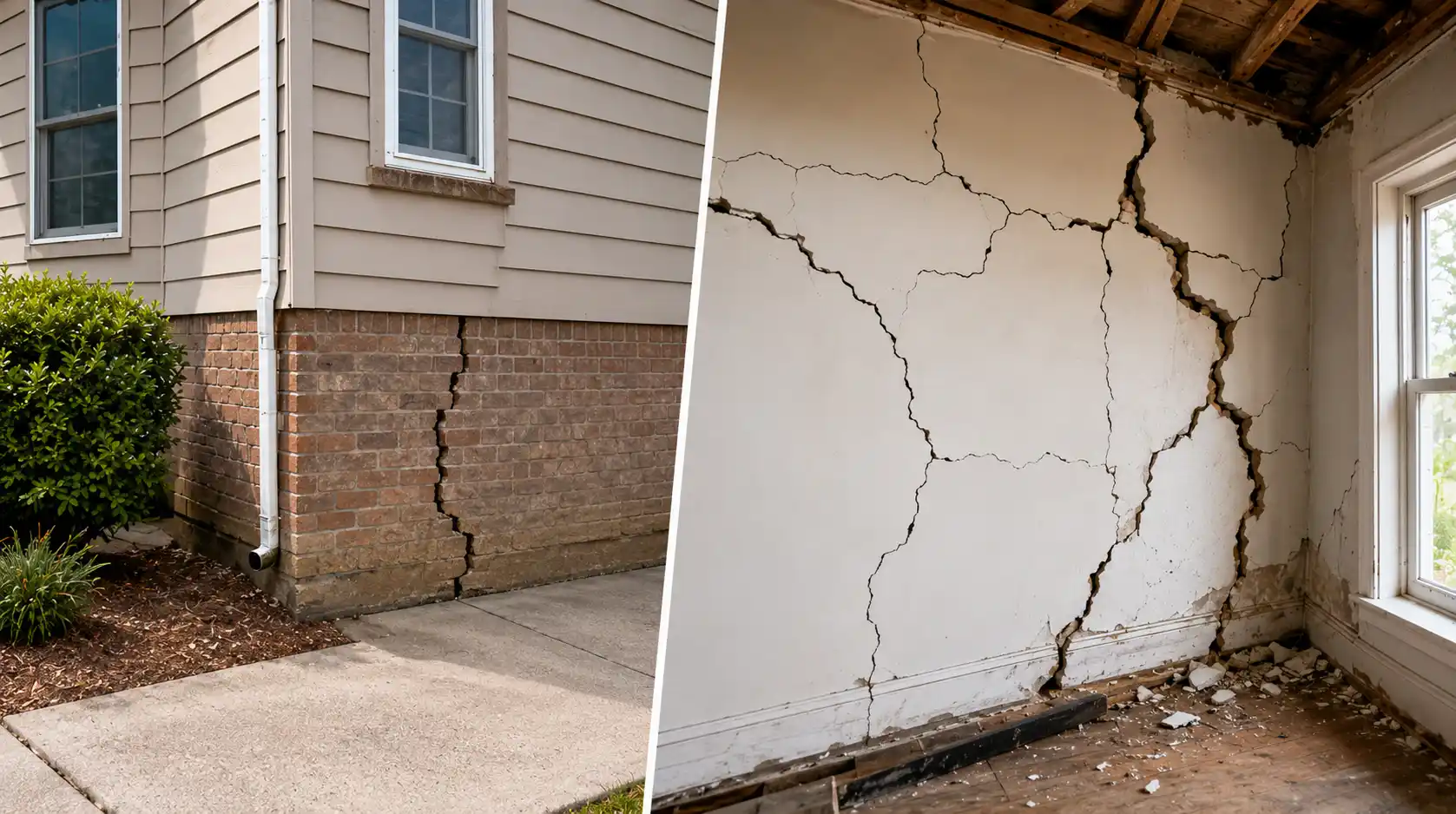
Understanding the difference between foundation settlement and structural failure is critical for homeowners in Raleigh and surrounding areas. Both issues can affect the safety, value, and long-term stability of a building, but they are not the same problem – and they do not require the same solution.
In many cases, homeowners confuse early-stage settlement signs with severe structural failure, which can lead to unnecessary repairs or, worse, delayed action on serious structural risks. Companies like Stonewall Structural Engineering help diagnose these issues through professional inspections and engineering assessments.
This guide breaks down the differences, warning signs, causes, and repair approaches so you can better understand what your property may be experiencing.
What is Foundation Settlement?
Foundation settlement occurs when the soil beneath a structure compresses or shifts unevenly, causing parts of the foundation to sink or move. In Raleigh, this is especially common due to clay-rich soils that expand when wet and shrink during dry periods.
Common Causes of Foundation Settlement
| Cause | Description |
| Soil movement | Expanding and shrinking clay soils beneath the foundation |
| Poor drainage | Water pooling around the foundation weakens the supporting soil |
| Improper compaction | Soil not properly compacted during construction |
| Tree roots | Roots pulling moisture from soil causing uneven shrinkage |
Foundation settlement is often gradual and may begin subtly before becoming more noticeable.
Signs of Foundation Settlement
Settlement issues typically develop slowly, giving homeowners time to detect early warning signs if they know what to look for.
Common indicators include:
- Small cracks in drywall or ceilings
- Stair-step cracks in brick exteriors
- Doors and windows sticking or misaligning
- Uneven or sloping floors
- Minor separation between walls and trim
According to structural inspection findings from Stonewall Structural Engineering, these symptoms often appear due to soil movement and moisture imbalance around the structure.
While these issues may look concerning, they do not always indicate immediate structural danger. However, they should never be ignored.
What is Structural Failure?
Structural failure is a more severe condition where critical load-bearing components of a building can no longer safely support the weight of the structure.
This is not just surface-level damage – it involves the actual structural system of the home, including beams, columns, load-bearing walls, or foundation systems.
Causes of Structural Failure
- Long-term unresolved foundation settlement
- Overloaded or undersized structural components
- Water damage weakening structural framing
- Poor construction or design errors
- Severe foundation movement or collapse
Unlike settlement, structural failure often requires immediate engineering intervention to prevent further damage or collapse.
Signs of Structural Failure
Structural failure symptoms are more advanced and typically indicate significant risk.
Key warning signs include:
- Large diagonal or horizontal cracks in walls
- Sagging or collapsing floors
- Roofline deformation or visible dips
- Separation between structural elements
- Sudden worsening of existing cracks
At this stage, the structure may already be compromised, and professional evaluation becomes urgent.
Foundation Settlement vs Structural Failure: Key Differences
To understand how serious your issue may be, it helps to compare both conditions side-by-side.
| Feature | Foundation Settlement | Structural Failure |
| Severity | Moderate | Severe |
| Progression | Slow and gradual | Rapid or advanced |
| Cause | Soil movement | Structural system breakdown |
| Repair type | Drainage, stabilization | Engineering redesign, reinforcement |
| Risk level | Low to moderate | High (safety risk) |
The key difference is that settlement is soil-related movement, while structural failure is a failure of the building system itself.
Why Raleigh Homes Are Especially at Risk
Raleigh and the greater North Carolina region have unique soil and climate conditions that make foundation problems more common.
Contributing regional factors:
- Expansive clay soils that shift with moisture levels
- Heavy seasonal rainfall leading to water saturation
- Drought cycles causing soil shrinkage
- Rapid urban development affecting natural drainage
These environmental conditions create a constant cycle of soil expansion and contraction, increasing the likelihood of foundation movement over time.
When Foundation Settlement Becomes Structural Failure
One of the most important concepts for homeowners is understanding that settlement can evolve into structural failure if ignored.
This progression typically follows:
- Minor cracks and uneven floors appear
- Soil movement continues unchecked
- Structural elements begin to shift
- Load distribution becomes uneven
- Beams, walls, or foundation components fail
This is why early inspection is critical. Companies such as Stonewall Structural Engineering emphasize early detection and detailed engineering reports to prevent the escalation of long-term damage.
Professional Evaluation and Engineering Inspections
A structural engineer plays a crucial role in diagnosing whether the issue is settlement or structural failure.
What a structural inspection typically includes:
- Foundation level and elevation analysis
- Cracks mapping and measurement
- Load-bearing wall evaluation
- Moisture and drainage assessment
- Structural integrity report with repair recommendations
Unlike general contractors, structural engineers provide unbiased analysis focused purely on safety and design integrity.
Severity Progression of Foundation Issues
| Condition Type | Visible Symptoms | Recommended Action |
| Early settlement | Minor cracks, slightly sticking doors | Monitor + drainage correction |
| Moderate settlement | Uneven floors, widening cracks | Engineering inspection |
| Advanced settlement | Multiple structural shifts | Structural reinforcement |
| Structural failure | Sagging, major displacement | Immediate repair required |
Repair Approaches
For Foundation Settlement:
- Improving drainage systems
- Installing French drains or grading correction
- Soil stabilization
- Foundation leveling or pier systems
For Structural Failure:
- Beam and column reinforcement
- Foundation replacement or underpinning
- Structural redesign
- Load redistribution systems
The complexity and cost increase significantly when issues progress from settlement to failure.
Why Early Inspection Matters
Delaying inspection can turn a manageable settlement issue into a major structural failure problem. Early diagnosis allows homeowners to:
- Reduce repair costs
- Prevent structural collapse risks
- Maintain property value
- Avoid extensive reconstruction
Structural engineering firms like Stonewall Structural Engineering focus on providing clear, actionable reports that help homeowners make informed decisions before problems escalate.
The Key to Preventing Major Structural Repairs
Foundation settlement and structural failure may look similar at first glance, but they represent very different levels of risk and repair complexity. Settlement is often soil-related and manageable when detected early, while structural failure involves serious compromise of a building’s load-bearing system.
For homeowners in Raleigh, understanding these differences is essential due to the region’s soil behavior and climate conditions. If warning signs appear – whether minor cracks or major shifts – getting a professional structural evaluation is the safest next step.
A timely inspection from experienced engineers ensures that small issues do not turn into costly structural emergencies, protecting both your home and long-term investment.
FAQs
What is the main difference between foundation settlement and structural failure?
Foundation settlement is caused by soil movement, while structural failure involves damage to load-bearing structural components.
Is foundation settlement dangerous for my home in Raleigh?
It can become serious if ignored, but early-stage settlement is usually manageable with proper drainage or foundation repair.
What are the early warning signs of foundation settlement?
Common signs include small wall cracks, sticking doors, uneven floors, and minor gaps around windows or trim.
When does settlement turn into structural failure?
When soil movement continues unchecked and begins affecting load-bearing walls, beams, or the overall stability of the structure.
Should I hire a structural engineer or contractor first?
A structural engineer is best for diagnosis because they provide an unbiased assessment and recommend appropriate repair solutions.