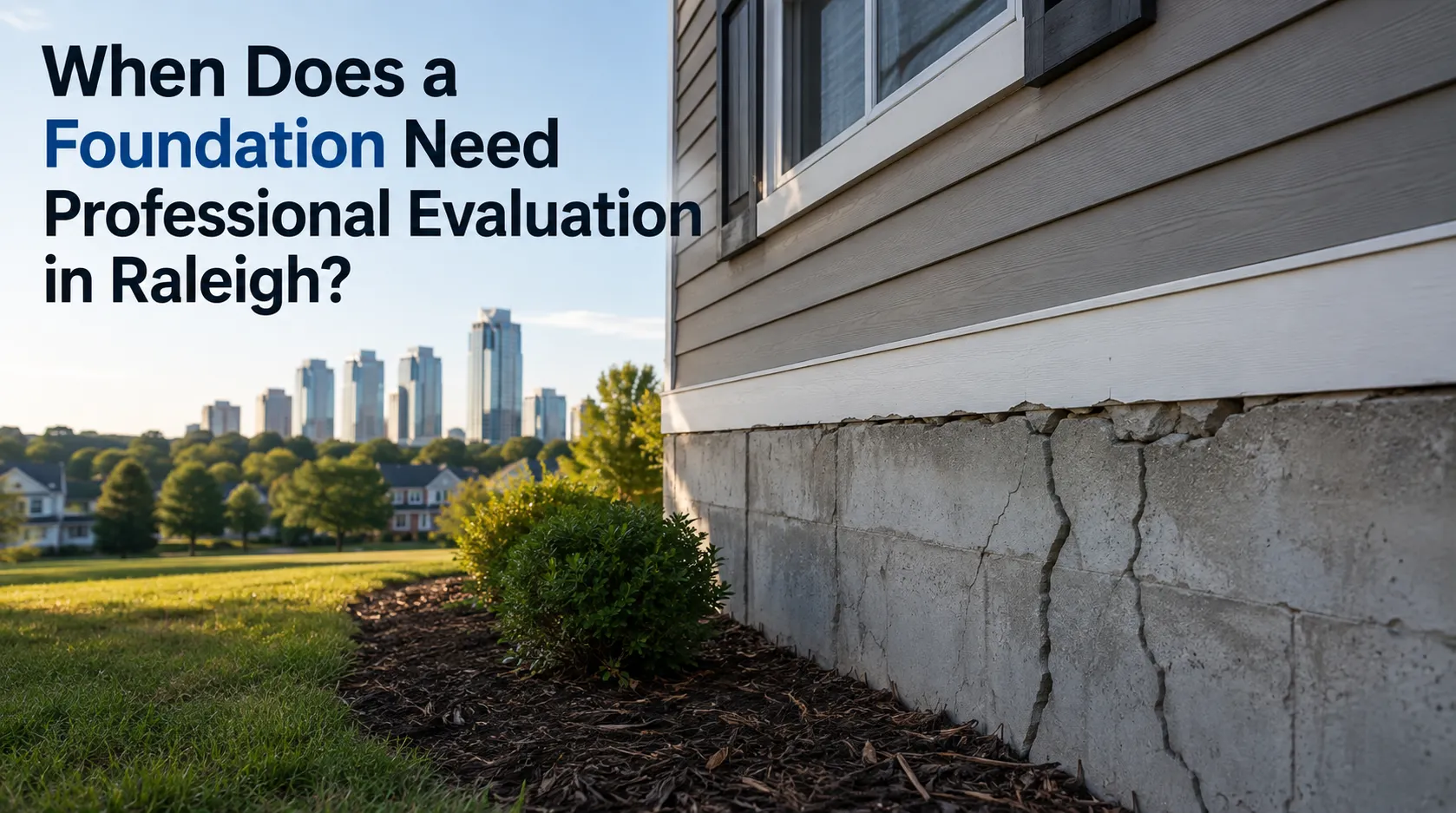
Your home’s foundation is responsible for supporting every wall, floor, and roof component above it. Even small foundation issues can gradually develop into larger structural problems if they are ignored. While minor cosmetic cracks are common in many homes, certain warning signs indicate that it’s time to seek a professional structural evaluation rather than relying on assumptions.
For homeowners in Raleigh, changing soil conditions, seasonal moisture fluctuations, aging construction, and drainage problems can all contribute to foundation movement over time. Understanding when to schedule a professional evaluation can help prevent costly repairs while ensuring your home’s long-term structural integrity.
Why Foundation Problems Should Never Be Ignored
Many homeowners first notice small drywall cracks or doors that suddenly become difficult to close. These symptoms often appear minor, but they may indicate movement occurring beneath the structure.
A professional structural engineer evaluates the entire building – not just visible cracks – to determine whether the issue is cosmetic, environmental, or structural. Unlike contractors who primarily focus on repairs, structural engineers provide an independent assessment based on engineering analysis and observable building performance.
Firms like Stonewall Structural Engineering provide residential and commercial structural inspections, foundation evaluations, engineering reports, and structural design services throughout Raleigh and surrounding North Carolina communities.
Common Signs Your Foundation Needs Professional Evaluation
Several warning signs should never be ignored.
Cracks That Continue Growing
Hairline cracks may occur naturally as concrete cures. However, cracks that continue widening, appear in stair-step patterns along brick walls, or extend across multiple surfaces often deserve professional evaluation.
Engineers determine whether cracking is caused by normal settlement or active structural movement.
Uneven or Sloping Floors
Floors that suddenly slope, bounce excessively, or feel uneven may indicate movement within the foundation or supporting framing system.
A structural evaluation identifies whether the issue originates from foundation settlement, damaged floor framing, or moisture-related deterioration.
Doors and Windows No Longer Operate Properly
If doors begin sticking or windows become difficult to open despite no visible damage, shifting structural components could be affecting the building’s alignment.
Although humidity sometimes causes temporary swelling, persistent operation issues often warrant further investigation.
Gaps Around Walls or Ceilings
Visible separation between walls, ceilings, trim, or flooring may suggest structural movement affecting the building frame.
Professional engineers evaluate whether these gaps result from seasonal movement or foundation displacement.
Exterior Brick or Masonry Cracks
Brick veneer can reveal structural movement before interior finishes do. Horizontal cracks, stair-step cracks, or widening mortar joints should be professionally evaluated before repairs are attempted.
Raleigh’s Soil Conditions Can Increase Foundation Movement
The Raleigh region contains varying soil types that expand and contract as moisture levels change throughout the year.
Periods of heavy rainfall followed by extended drought create repeated expansion and shrinkage beneath foundations. Over time, these soil movements may contribute to differential settlement, especially if drainage around the home is inadequate.
Older homes may also experience foundation movement due to decades of gradual soil consolidation or changing groundwater conditions. These local environmental factors make professional evaluation particularly valuable when structural symptoms begin appearing.
Situations That Require Immediate Structural Evaluation
Certain situations justify scheduling an inspection as soon as possible:
- Large or rapidly expanding foundation cracks
- Significant floor settlement
- Chimney separation from the house
- Bowing or leaning foundation walls
- Water intrusion accompanied by structural cracking
- Structural damage following severe storms or tree removal
- Foundation concerns identified during a home inspection
- Before purchasing an older home with visible structural issues
Early evaluation often prevents uncertainty and allows homeowners to understand the actual condition before problems worsen.
Foundation Warning Signs at a Glance
| Foundation Symptom | Possible Structural Concern | Professional Evaluation Recommended? |
| Hairline drywall cracks | Normal settlement or minor movement | Monitor if isolated |
| Stair-step brick cracks | Foundation settlement | Yes |
| Uneven floors | Foundation or framing movement | Yes |
| Doors and windows sticking | Structural shifting | Yes |
| Foundation wall bowing | Structural pressure or soil movement | Immediate evaluation |
| Water intrusion with cracks | Drainage and structural concerns | Yes |
What Happens During a Professional Foundation Evaluation?
A structural engineer performs a comprehensive assessment of the property’s structural system rather than focusing solely on visible cracks.
The evaluation may include:
- Exterior foundation inspection
- Interior structural observations
- Floor elevation assessment
- Crawl space or basement inspection
- Crack pattern documentation
- Drainage evaluation
- Structural movement analysis
- Written engineering recommendations
After the inspection, homeowners receive a detailed report explaining observed conditions, likely causes, and recommended next steps. If repairs are necessary, engineering documentation helps ensure repairs address the root cause rather than simply covering visible symptoms. Stonewall Structural Engineering’s inspections include observations, analysis, photographs, and repair recommendations to help property owners make informed decisions.
Why Professional Evaluation Matters Before Repairs
Foundation repair can represent a significant investment. However, not every crack requires major structural work.
Without an engineering evaluation, homeowners may receive repair recommendations based solely on visible symptoms rather than verified structural analysis.
A licensed structural engineer provides an objective assessment that helps determine:
- Whether structural movement is active
- If repairs are actually necessary
- Which repair methods are appropriate
- Whether cosmetic repairs alone are sufficient
This independent evaluation reduces unnecessary expenses while ensuring legitimate structural issues receive proper attention.
When Buying or Selling a Home
Foundation concerns frequently arise during real estate transactions.
Home inspectors may identify possible structural issues but typically recommend further evaluation by a licensed structural engineer rather than diagnosing the cause themselves.
Obtaining a professional structural report provides buyers, sellers, and lenders with documented engineering findings that support informed decisions during negotiations.
For sellers, identifying and addressing foundation concerns before listing can also help reduce delays during closing.
Why Raleigh Homeowners Choose Structural Engineers
Foundation movement is rarely identical from one property to another. Soil conditions, drainage, construction methods, and building age all influence how structures respond over time.
Professional structural engineers evaluate the complete structural system before recommending any course of action. Stonewall Structural Engineering serves homeowners and commercial property owners throughout Raleigh, Durham, Cary, Chapel Hill, Wake Forest, Apex, and surrounding communities with structural inspections, engineering reports, residential and commercial design, and practical engineering solutions tailored to each property’s specific needs.
Protect Your Home with a Professional Foundation Evaluation
Foundation problems rarely improve on their own. While some cracks are harmless, others may indicate structural movement that becomes more expensive to repair if left untreated.
Scheduling a professional foundation evaluation is recommended whenever you notice recurring cracks, uneven floors, sticking doors, visible foundation movement, or structural concerns during a home purchase. A licensed structural engineer can accurately determine whether the issue is cosmetic, environmental, or structural, allowing you to move forward with confidence.
For Raleigh homeowners, early evaluation provides peace of mind, protects one of your largest investments, and helps ensure that any necessary repairs are based on sound engineering analysis rather than guesswork.
FAQs
How do I know if my foundation needs a professional evaluation?
If you notice widening cracks, uneven floors, sticking doors or windows, bowing foundation walls, or gaps around walls and ceilings, it’s a good idea to schedule a professional structural evaluation. A licensed structural engineer can determine whether the issue is cosmetic or structural.
Are small foundation cracks normal?
Yes. Small hairline cracks can occur as concrete cures or from normal settlement. However, cracks that continue to grow, form stair-step patterns, or appear alongside other symptoms should be evaluated by a structural engineer.
What causes foundation problems in Raleigh?
Raleigh’s expansive clay soils, seasonal moisture changes, poor drainage, aging foundations, and tree root activity can all contribute to foundation movement over time.
What happens during a foundation evaluation?
A structural engineer inspects the foundation, floors, walls, crawl space or basement, drainage conditions, and visible cracks. They then provide a written engineering report with findings and recommendations based on the home’s structural condition.
Should I get a foundation evaluation before buying a home?
Yes. If a home inspection identifies possible structural concerns, a foundation evaluation by a licensed structural engineer can provide an independent assessment, helping buyers understand the condition of the property before closing.