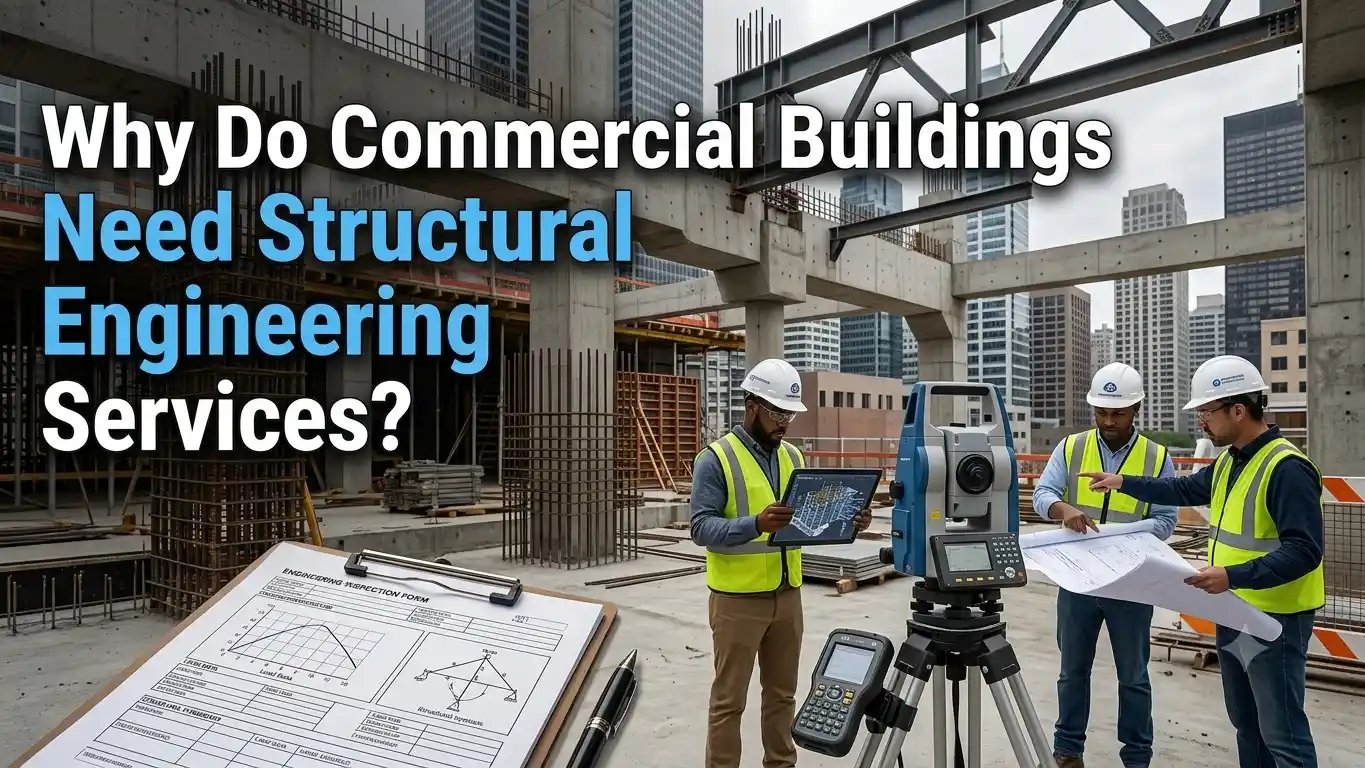
A commercial building has to do more than look good – it must safely support people, equipment, weather loads, and everyday use for years to come. That is why commercial structural engineering services are an important part of planning, constructing, renovating, and evaluating commercial properties in Raleigh.
A structural engineer determines how a building’s structural components work together, evaluates existing conditions, and develops practical solutions that support safety, performance, constructability, and applicable requirements.
What Does a Structural Engineer Do for a Commercial Building?
Structural engineering focuses on the parts of a building that carry and transfer loads. Depending on the project, that can include foundations, beams, columns, walls, roof systems, framing, and connections.
For a Raleigh commercial project, a structural engineer may help with:
- New commercial building design
- Renovations and additions
- Structural inspections and condition assessments
- Foundation and framing evaluations
- Construction drawings and structural details
- Changes that affect load-bearing components
- Repair or reinforcement recommendations
Stonewall Structural Engineering provides commercial structural design for property types including office buildings, warehouses, and retail spaces in the Raleigh area.
5 Reasons Commercial Buildings Need Structural Engineering
1. Structural Safety Starts With the Load Path
Every building transfers loads through a structural system and ultimately into the ground. Engineers analyze those load paths so beams, columns, walls, connections, and foundations work together rather than treating each component in isolation.
This becomes especially important when a project involves large open spaces, heavy equipment, unusual layouts, additions, or changes to existing structural elements.
2. Engineering Helps Meet Applicable Requirements
North Carolina regulates the practice of engineering in the public interest, including engineering work involving structures and buildings. State law also establishes requirements concerning professional engineering licensure and responsible charge.
The exact engineering and documentation requirements vary by project. A qualified structural engineer can help determine what the project requires and coordinate structural work with the applicable building code and permitting process.
3. Good Design Can Prevent Expensive Rework
Structural decisions made late in a project can create conflicts with architecture, mechanical systems, electrical work, or construction sequencing.
Bringing structural engineering into the design process early allows the team to evaluate framing concepts, spans, foundations, materials, and other constraints before they become expensive field problems. Early structural input can also make architectural concepts more practical to build.
4. Existing Buildings Need Engineering Too
Not every structural engineering project involves new construction.
A commercial property may need an engineer when an owner wants to remove a wall, add equipment, modify a roof, expand an opening, investigate cracking, evaluate settlement, or renovate an older building.
The key question is not simply “Does this look damaged?” It is “What is causing the condition, and does it affect structural performance?”
5. Engineering Supports Better Construction Decisions
Structural drawings and details give contractors a defined basis for construction. When field conditions differ from the original assumptions, an engineer can evaluate the situation and recommend an appropriate response.
That can help reduce guesswork and prevent seemingly minor changes from creating unintended structural consequences.
When Should a Raleigh Business Hire a Structural Engineer?
| Project situation | Why engineering may be needed |
| New commercial construction | Design the structural system and coordinate it with the building |
| Renovation or addition | Determine how proposed changes affect existing structure |
| Structural damage | Identify the likely cause and appropriate corrective approach |
| Wall or framing modification | Evaluate load-bearing elements and load paths |
| Foundation concerns | Assess movement, distress, and structural implications |
| Equipment or rooftop changes | Determine whether the structure can support new loads |
Not every renovation requires the same level of engineering. The appropriate scope depends on the building, proposed work, existing documentation, site conditions, and applicable requirements.
Common Mistakes to Avoid
One common mistake is assuming an architect, contractor, or general building inspector can automatically replace structural engineering. These professionals have different responsibilities, and structural questions may require specialized engineering analysis.
Another mistake is waiting until construction begins to address structural changes. If a proposed modification affects a load-bearing component, getting engineering input before work starts is generally the more practical approach.
Finally, avoid choosing an engineer based solely on price. Look for relevant commercial experience, clear communication, practical documentation, and appropriate professional credentials.
Why Local Raleigh Experience Matters
Commercial projects in Raleigh involve more than structural calculations. Local permitting processes, construction practices, existing building conditions, and applicable North Carolina requirements can all influence how a project is designed, documented, and constructed.
Working with a structural engineering firm familiar with Raleigh commercial projects can make coordination easier between owners, architects, contractors, and other project professionals. Local experience can also help engineers recognize common site and construction considerations early, reducing avoidable design conflicts.
Choose the Right Structural Engineering Support for Your Project
Commercial structural engineering is not simply about producing drawings. It is about understanding how a building carries loads, responds to real-world conditions, and can be designed or modified responsibly.
If you are planning a new commercial building, renovation, addition, structural modification, or assessment in Raleigh, talk with a structural engineering professional early in the process. Stonewall Structural Engineering can discuss your project scope and help determine the appropriate next step.
FAQs
What is commercial structural engineering?
Commercial structural engineering involves analyzing and designing the structural components of buildings such as foundations, beams, columns, walls, roofs, and connections. It can also include inspections, evaluations, repairs, and modifications to existing structures.
Do all commercial buildings need a structural engineer?
Not every project requires the same level of structural engineering involvement. The need depends on the building, project scope, structural changes, applicable requirements, and whether professional engineering services are required.
When should I hire a structural engineer for a commercial renovation?
Ideally, involve a structural engineer during the planning or design stage if the renovation could affect load-bearing walls, framing, foundations, roofs, openings, or other structural components. Early review can identify structural constraints before construction begins.
Can a structural engineer inspect an existing commercial building?
Yes. Structural engineers can evaluate visible distress and existing structural conditions and determine whether further investigation, repair, reinforcement, or monitoring may be appropriate.
What does a structural engineer look at in a commercial building?
The evaluation depends on the project, but it may include foundations, framing, beams, columns, walls, roof systems, connections, loads, and visible signs of movement or deterioration.
How do I choose a commercial structural engineer in Raleigh?
Look for a properly qualified professional with relevant commercial experience, a clear process, practical recommendations, and familiarity with local projects and North Carolina requirements. Ask what services are included and what deliverables you will receive.